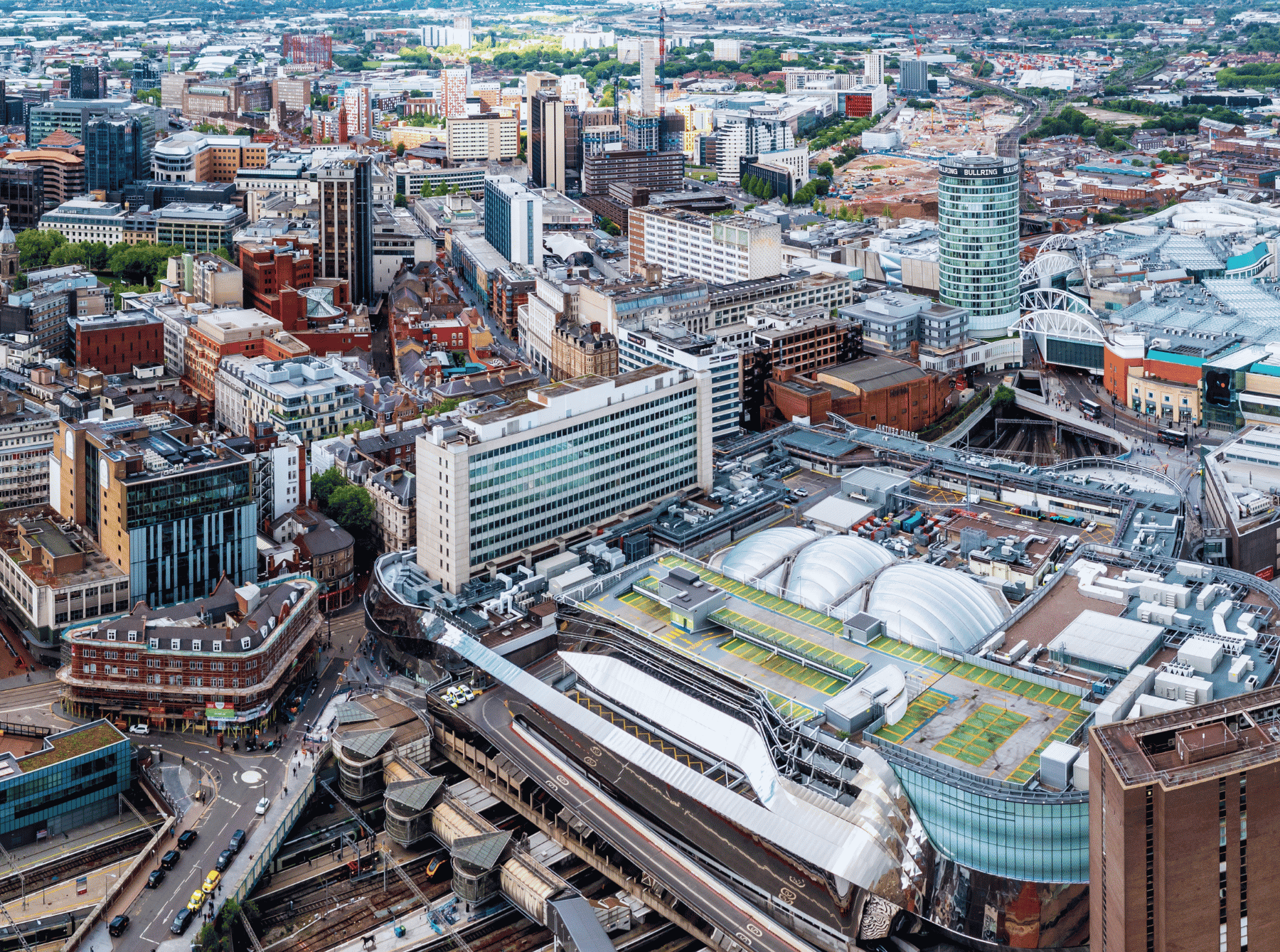
Brownfield sites are back on the agenda, and for good reason. And for many UK businesses, a mezzanine can turn underused urban and edge-of-town land into a practical answer to pressure for more industrial, logistics and storage space.
Location alone is not enough. To make these sites commercially viable, every square metre has to work harder. That is where mezzanines for brownfield sites come into their own. By building upwards within existing or newly refurbished premises, businesses can increase capacity, improve efficiency and make regeneration projects deliver more value from the same footprint.
Brownfield sites are areas of land that have been developed before. They may include former factories, warehouses, depots, retail parks, petrol stations or industrial units. Some are derelict. Others are still in use but no longer fit for the demands of modern occupiers.
The reason they are attracting attention is clear. The UK needs more space for housing, employment, logistics, storage and manufacturing, yet suitable land in and around towns and cities is limited. At the same time, there is a strong planning and regeneration argument for bringing underused urban sites back into productive use before developing new greenfield land.
Government policy has also put brownfield regeneration firmly in the spotlight. Its Brownfield Passport proposals are designed to make planning routes clearer for suitable development on previously developed urban land. The aim is to make it easier to turn derelict or underused sites into valued parts of towns and cities.
For commercial and industrial occupiers, this creates a practical question. Once a brownfield site has been acquired, refurbished or redeveloped, how can every square metre deliver value?
That is where mezzanines have a major role to play.
Why brownfield sites need efficient space planning
Brownfield sites often come with constraints. The plot may be smaller than an equivalent out-of-town development. The building may have an existing structure that must be worked around. Access, parking, neighbouring uses and planning conditions may all influence what can be achieved.
At the same time, many brownfield sites are in highly desirable locations. They are often close to major roads, public transport, ready workforce and end customers. For logistics operators, self-storage companies, manufacturers and warehouse users, that location can be more valuable than a larger site in a less-connected area.
The challenge is to get more from the space available, and at Hi-Level Mezzanines we do just that.
A mezzanine floor allows a business to add usable floor area within the existing building envelope. Instead of extending outwards, which may not be possible on a constrained site, the operator can build upwards. This can support storage, production, picking, packing, office space, plant areas, walkways, welfare facilities or automation infrastructure, depending on the building and the operation.
In a brownfield context, that can make the difference between a site being marginal and a site being commercially viable.
Recent schemes show how brownfield sites are being brought back into productive commercial use. At the St Helens Manufacturing and Innovation Campus on Merseyside, Project Halo is set to deliver 85,000 sq. ft of high-spec workspace across four Tech Box units on a five-acre brownfield site. In Swindon, Panattoni Park’s Unit S915 is a 915,000 sq. ft warehouse and production facility being built on brownfield land, showing the scale of opportunity for modern industrial development on previously used sites.

The advantages of installing a mezzanine on a brownfield site
A well-designed mezzanine can help make brownfield redevelopment more cost-effective, more efficient and future-proofed.
More usable space without a larger footprint
The most immediate benefit is increased floor area. In buildings with sufficient clear height, a mezzanine can add one or more extra levels of operational space without increasing the footprint of the building.
For a brownfield site where external expansion is limited, this is a clear advantage. It enables the occupier to increase capacity while staying within the same plot.
Better return on the site investment
Buying, leasing or redeveloping a brownfield site involves cost. Remediation, surveys, fit-out, planning work and building upgrades may all be required. A mezzanine helps improve the return on that investment by increasing the productive area within the building.
For landlords, it can make a unit more attractive to higher-value occupiers. For end users, it can delay or remove the need to relocate. For developers, it can improve the commercial offer of a refurbished or newly built industrial unit.
Faster adaptation of existing buildings
Many operators choose brownfield sites because they need a location quickly. Compared with a full new-build project, adapting an existing building can offer a shorter route to occupation.
A mezzanine can support that strategy by helping an existing structure meet the needs of a modern operation. This is especially valuable in older warehouses that were not originally designed for e-commerce, robotics, high-speed sortation or dense storage.
Flexible layouts for changing operations
A brownfield site may need to serve several purposes over its lifetime. A warehouse may later need automation. A self-storage facility may need more rooms. A logistics hub may need a different balance between inbound, sortation and despatch areas.
A bespoke mezzanine floor can be designed around current requirements while allowing for future operational change. This is where early design input is vital. The right mezzanine floor supplier will look beyond the first fit-out and consider loadings, access routes, fire protection, material handling, safety barriers, pallet gates, decking and future expansion. Hi-Level Mezzanines does this for every client.
Improved sustainability through reuse
Reusing existing land and buildings can reduce the need for new land take. It can also help local authorities, developers and occupiers regenerate run-down areas while using infrastructure that is already in place.
Mezzanines support this approach because they make better use of vertical space. Rather than treating a building as a single-level box, a mezzanine allows more activity to happen within the same structure.
Why ground conditions matter on brownfield sites
Brownfield land has often had previous industrial, commercial or infrastructure use. That means the ground conditions below the building may need careful assessment before a mezzanine is installed.
For example, a floor slab may not have been designed for the additional point loads created by a mezzanine structure. Reclaimed land or previously disturbed ground may also need investigation. In some cases, the project may need a ground investigation report, slab assessment or piling solution.
This is why choosing the right mezzanine partner matters. A professional supplier should ask the right questions at the outset, review the building and site constraints, and work with the client to establish whether the proposed structure is suitable.
Hi-Level Mezzanines provides structural engineering and calculations as part of our service, helping clients understand what is achievable and what steps may be needed before installation. This is especially important where brownfield redevelopment involves older buildings, unknown ground history or ambitious load requirements.
The value of mezzanines for last-mile logistics hubs
Last-mile logistics is one of the strongest use cases for brownfield redevelopment. Operators need sites close to end customers, particularly in urban and suburban areas. Brownfield locations often sit in exactly the right places: near towns, cities, arterial roads and established communities.
As delivery expectations have increased, logistics operators have had to place stock and parcels closer to the customer. This has led to growing interest in urban micro-hubs, consolidation centres and smaller logistics hubs that can feed cleaner final-mile delivery methods such as electric vans, cargo bikes and on-foot delivery.
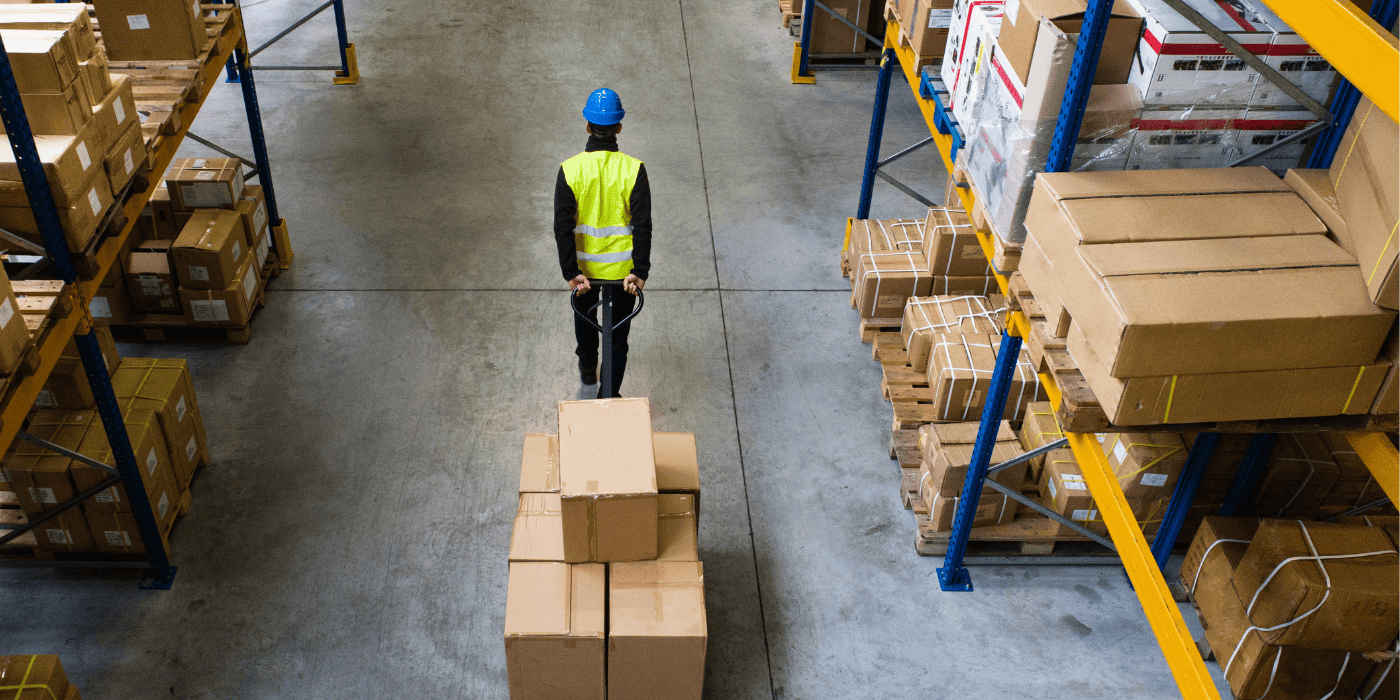
However, these sites are often tight. A last-mile hub may be operating from a former workshop, retail unit, light industrial building or depot. The footprint may be limited, but the volume moving through the building can be high.
A mezzanine can help by creating extra space for:
- Parcel sortation
- Temporary storage
- Returns processing
- Packing benches
- Office or management areas
- Staff welfare space
- Conveyor support
- Battery charging or equipment zones, subject to the correct design and safety requirements
In this setting, the mezzanine is not simply a storage platform. It becomes part of the operational flow.
For example, ground-floor space can be kept clear for fast-moving goods, loading, vehicle access and despatch. The mezzanine can then house slower-moving stock, workstations, support functions or equipment. In larger buildings, a multi-tier mezzanine can help separate processes and increase capacity without forcing the operator to move further away from the delivery area.
This matters because location is central to last-mile efficiency. A smaller site in the right urban position may be more valuable than a larger site further away. Mezzanines help make those smaller, better-located sites work harder.
What is more, micro-hubs can make last-mile logistics greener by staging goods closer to customers, reducing journey lengths, emissions and reliance on larger vehicles. This matters in cities such as London, where freight contributes 25% of road transport emissions. By supporting smaller, cleaner vehicles for the final stretch, including electric light commercial vehicles and cargo bikes, micro-hubs can help cut emissions sharply, with cargo bikes reducing emissions by 97% compared with diesel vans. Micro-hubs on brownfield sites, enhanced with a mezzanine, can help operators cut congestion, manage peak volumes more efficiently and support cleaner deliveries in towns and cities.
Mezzanines and brownfield warehouse automation
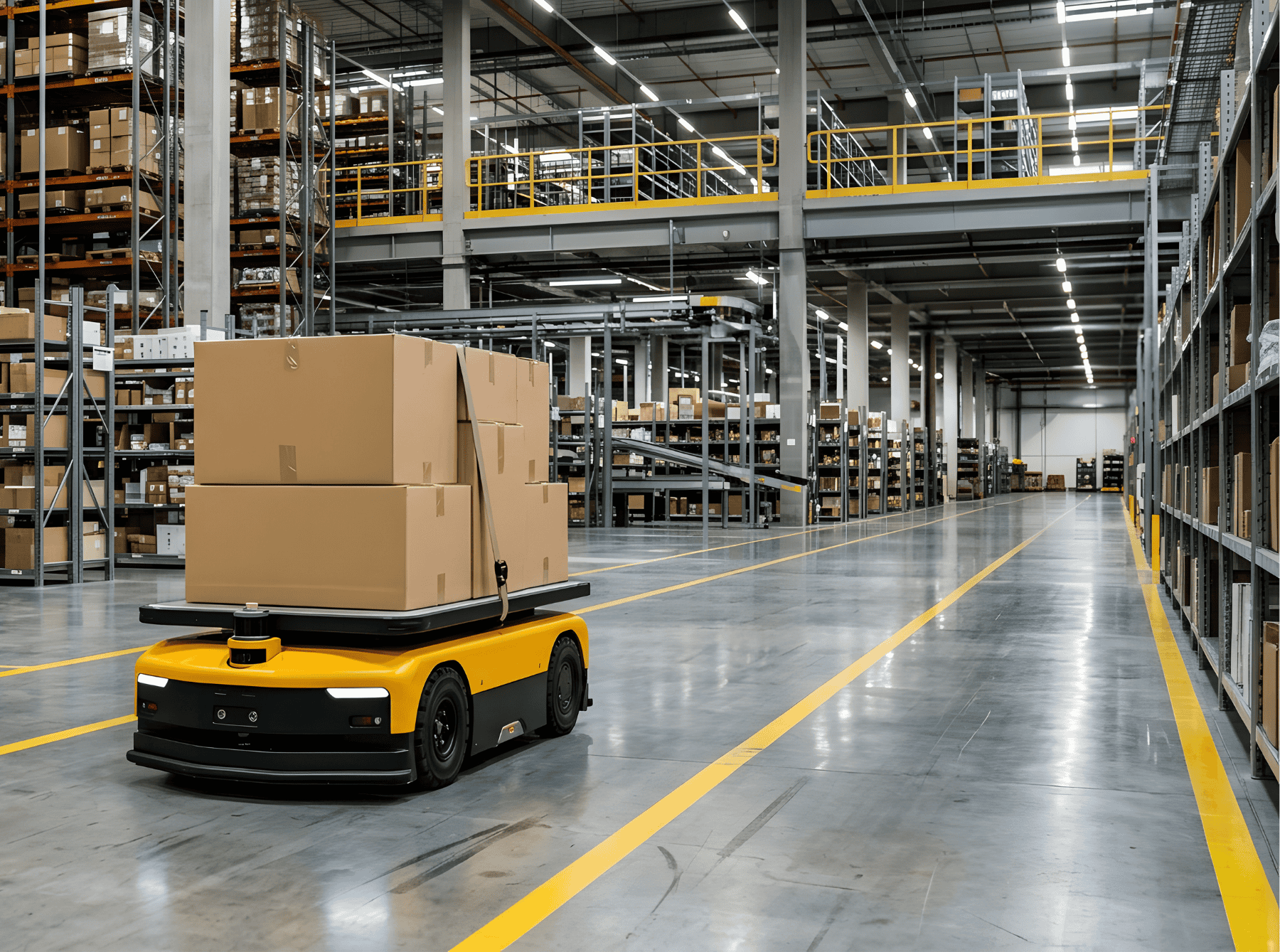
Many brownfield warehouses were built before the rise of e-commerce, robotics and high-speed fulfilment. They may have good locations but layouts that need updating.
A mezzanine can form part of a wider warehouse modernisation project. It can be designed to integrate with conveyors, robotics, automated storage, sortation systems and material-handling equipment.
This is an area where Hi-Level’s experience is particularly relevant. The company designs and installs bespoke mezzanine floors for large-scale warehouse and logistics projects, including automation-ready structures. Our Hi-Tile advanced flooring system is designed for demanding industrial environments and can be suitable for projects where durability and compatibility with modern equipment are key considerations.
For operators adapting brownfield facilities, this ability to integrate mezzanine design with automation planning can help avoid costly compromises later.
How mezzanines support self-storage on brownfield sites
Self-storage is another sector where brownfield sites offer strong potential.
Many self-storage businesses want edge-of-town or suburban locations that are easy for customers to reach. Former industrial units, trade counters, retail warehouses and commercial buildings can be ideal. They often have good road access, visible locations and enough internal height to make vertical expansion possible.
For self-storage operators, the business model depends on creating as much lettable space as possible while keeping the customer experience simple and safe. A mezzanine floor can increase the number of storage rooms within the same building, improving the revenue potential of the site.
Mezzanines can also help self-storage operators create a better layout. Ground-floor units can be used for larger rooms, drive-up convenience or high-demand storage sizes. Upper levels can provide additional rooms accessed by stairs, lifts or goods lifts where appropriate.
A bespoke mezzanine design can also accommodate corridors, partitioning, lighting, fire protection, handrails and safety features. For operators taking over older brownfield buildings, this can turn an underused structure into a more efficient, customer-friendly facility.
The benefit is especially strong in edge-of-town locations where land values are rising and expansion space is limited. Instead of taking on an additional site, the operator can increase capacity within the existing building.
Why choosing the right mezzanine supplier is critical
Brownfield projects call for careful planning. Existing structures, slab capacity, headroom, access points, services, fire strategy and future operating requirements all need to be considered before a mezzanine design is finalised.
Hi-Level Mezzanines brings together in-house design, structural engineering, UK-fabricated steelwork, project management and installation expertise. This gives clients a single partner from concept to completion.
For brownfield sites, that matters. The project may need early feasibility advice. It may need value engineering to make the best use of steel and control cost. It may require ancillary products such as staircases, handrails, pallet gates, safety barriers or specialist decking. It may also need to be delivered with minimal disruption if the building is already operational.
Hi-Level’s experience across warehousing, logistics, retail, e-commerce, manufacturing and self-storage means it understands the demands of large-scale commercial and industrial environments. The aim is not just to install a mezzanine, but to create a structure that supports how the site needs to operate.
A practical route to better brownfield regeneration
Brownfield regeneration is about more than bringing neglected land back into use. It is about making that land work as efficiently as possible for the long term.
For last-mile logistics hubs, mezzanines can increase capacity in urban locations where space is limited. For self-storage operators, they can create more lettable rooms in accessible edge-of-town buildings. For warehouse and industrial users, they can help older sites meet modern operational demands.
As planning policy continues to encourage the reuse of previously developed land, businesses will need practical ways to maximise these sites. Mezzanine floors offer one of the most effective answers.
If you are assessing a brownfield site, refurbishing an existing building or planning a new industrial space on previously developed land, Hi-Level Mezzanines can help you understand what is possible. Contact the team to discuss a bespoke mezzanine solution that makes the best use of your site, your building and your investment.
Talk to us about making the most of your space, whether on a brownfield site or anywhere else.
-
Yes. Mezzanine floors maximise existing building volume and steel is recyclable. Hi-Level Mezzanines’ value-engineered designs use minimal materials without compromising safety.
- Mezzanines reuse existing building volume rather than require new building land or major external extensions
- Steel is highly recyclable and modern steel framing uses increasing recycled content
- Value engineering reduces over-use of material
- Minimising foundations and interventions reduces environmental disruption.
- Cost and Budgeting
-
Yes, when designed properly. Hi-Level Mezzanine’s qualified structural engineers design mezzanine floors to integrate with automation systems such as robotics, conveyors and sortation equipment.
Our revolutionary Hi-Tile flooring is specifically designed for heavy-duty performance, making it ideal for automated operations.
The key is ensuring the mezzanine can support dynamic loads, vibration, frequent movement, load cycles, concentrated loads and integration with conveyors or robotics.
When specifying a mezzanine for automation, Hi-Level Mezzanines will:
- Determine exact load per square metre and concentrated load scenarios
- Use robust flooring such as Hi-Tile that resists wear and deformation
- Provide vibration control if required
- Ensure foundations, bracing and stiffness meet strict engineering tolerances.
- Planning and Installation
- Sectors and Applications
-
Costs depend on:
- Size (square metres)
- Load capacity (static and dynamic)
- Number of tiers
- Height
- Column grid
- Ancillary features (stairs, pallet gates, handrails, fire protection, office partitions)
- Access / logistics for installing the steelwork.
Hi-Level Mezzanines offers a mezzanine floor calculator for quick budget estimates.
Hi-Level Mezzanines represents outstanding value thanks to:
- Our emphasis on value engineering—using just enough steel, optimising structural design to avoid over-specification.
- Our nine-stage process in design/installation to optimise cost and minimise waste.
- Our software platform iQD Pro which helps produce accurate budget and design estimates.
Mezzanines provide a cost-effective solution compared with relocation or expansion.
- Cost and Budgeting