The Mezzanine Floor Reference Library
A mezzanine floor can be installed in most commercial and industrial warehouse buildings provided the internal clear height is sufficient, the concrete floor slab can carry the additional column loads, and fire safety requirements can be met. Suitability is determined by structural, regulatory and operational factors at the building, not by a single fixed rule.
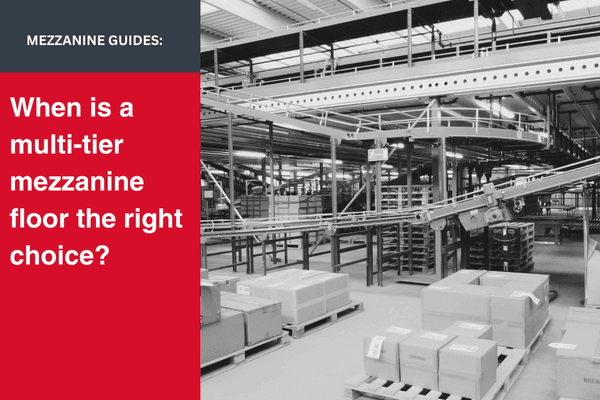
A mezzanine floor is used to create additional usable internal floor space within a building’s footprint, either retrofitted into an existing building or designed into a new build. Single-tier installations effectively double the floor area; multi-tier installations multiply it further. Common applications include warehousing, offices, manufacturing, retail and equipment housing. Suitability depends on internal height, slab capacity, fire safety requirements and operational purpose.
A mezzanine floor does not have a fixed cost. Total price is determined by floor area, structural load capacity, fire protection requirements, access systems, building constraints and regulatory compliance. Light-duty storage platforms in simple warehouse environments cost significantly less than fire-rated, high-load or multi-tier installations. Accurate budgeting requires defining structural, operational and compliance requirements at the outset.
A mezzanine floor in an industrial or warehouse building is a free-standing intermediate steel structure installed within an existing building to create additional usable internal floor space without extending the external footprint. It transfers loads to the existing floor slab and is treated as a permanent structural installation subject to building regulations and fire safety assessment.